
Heard County Criminal Docket Searches
Know the court first, then the name. Felonies usually belong to Heard County Superior Court. The Georgia Courts E-Access directory lists Heard Superior and points to PeachCourt. PeachCourt requires an account. Non-attorneys can register free, though document access and fees vary by case. Since no countywide search spans every court, work through the courts in order.
- Identify the court from the citation, notice, warrant papers, or case type.
- For a likely Superior felony, follow E-Access to Heard Superior and sign in to PeachCourt.
- Search with the most exact name or case number available and confirm the court before opening a match.
- Read entries for settings, pleas, rulings, and disposition, but do not treat a line as the full filed paper.
- Contact that court's clerk if the result is absent or a certified copy is needed.
Heard Criminal Dockets in Superior Court
Superior Court tries felonies and holds broad criminal jurisdiction. Tammy Teal, Clerk of Superior Court, keeps the Heard County criminal dockets for that court. Her counter sits at 215 East Court Square, Franklin, with mail to P.O. Box 40. Call (706) 675-3301, fax (706) 675-6138, or email through the official page. The office closes for lunch from noon to 1:00 p.m. It is open Monday through Friday, 8:00 a.m. to 5:00 p.m.
Ask for a plain docket, a named order, or a certified copy. Give the clerk the court. Offer a case number if you have one, a party name, and a helpful date range. Superior accepts requests in person, by phone, mail, fax, and email. The clerk posts no public courthouse terminal. Check with the office before counting on one.
No online match? Ask whether the case is in another court, older paper material, transferred, restricted, sealed, or part of a confidential juvenile file.
Criminal Dockets: What They Show
Expect a summary, not the whole story. A docket entry condenses a filing into a line or two. The statewide blank citation, accusation, and summons form supports these fields.
| Case identity | Court, county, citation or case number, and case caption. |
|---|---|
| Charge | The alleged offense and accusation or citation details. |
| Setting | Court date, hearing type, continuance, or reset. |
| Plea and trial | Guilty, not guilty, or nolo contendere plea, plus jury or bench fields. |
| Outcome | Verdict, dismissal, NOL PROS, dead docket, first offender, conditional discharge, sentence, fine, or probation. |
A Georgia-style number like 2019-CR-012345 pairs a year with a CR code. Heard County may format its own case numbers differently.
Heard Criminal Docket Outcome Terms
Status text can mislead without the order behind it. The official Georgia form separates outcomes that casual speech blurs together.
- NOL PROS
- Nolle prosequi, meaning no prosecution is recorded for that charge or entry. It is not the dismissal label.
- Dead docket
- A distinct status whose local effect should be checked with the clerk.
- Bond forfeiture
- A bond result, not by itself a guilty verdict.
- First offender
- A Georgia disposition category whose effect should be confirmed from the order.
- Restricted or sealed
- Access terms governed by law or court order, not synonyms for dismissed.
A disposed entry does not make every filed image free or public. When exact wording matters, request the order itself.
Criminal Case Stages on the Docket
A felony builds on the docket step by step. Expect a charge or filing first, then arraignment. Motions, notices, pretrial settings, and continuances can follow. A plea hearing or trial moves the case toward disposition, and sentencing may arrive in a later entry or order.
Docket flow: Filing › Arraignment › Pretrial › Plea or Trial › Disposition › Sentencing
A reset only moves a setting. It never dismisses the charge. A filing date is not a hearing date, and a plea is not a verdict. When an entry looks old or unclear, confirm the upcoming Heard County date with the clerk, and see the Heard County court schedule for date channels.
Heard Criminal Dockets at Magistrate
Not every Heard County criminal record starts or stays in Superior Court. Magistrate Court handles warrants, preliminary or minor criminal functions, and other limited matters. A June 2026 county clerk-position notice lists officer and citizen warrants, ordinance violations, physical and scanned files, notices, subpoenas, appeals, transfers, and certified-copy work. That breadth explains why a Superior-only search can miss part of a trail.
Call the Heard County Magistrate Court at (706) 675-3002 or visit its Court Square counter. County sources give conflicting Magistrate P.O. boxes. Confirm the mailing address before you send anything. Note that the eFileGeorgia link is a payment and login route. It is not the Superior criminal search.
Heard County Criminal Docket Courts
Case type and issuing authority decide which clerk holds the record. City courts may hear traffic, local ordinance matters, preliminary hearings, and warrants. Franklin runs municipal channels. Centralhatchee posts rules and ordinance material through its town clerk. A 2021 state report documents Ephesus Municipal Court. That does not prove a live search exists today.
| Court | Likely matter | Access route |
|---|---|---|
| Superior | Felonies and broad criminal jurisdiction | E-Access to PeachCourt, then Superior Clerk |
| Magistrate | Warrants and limited preliminary matters | Magistrate counter or phone |
| Municipal | City ordinance and traffic matters | Issuing city clerk |
| Juvenile | Under-17 delinquency and minor offenses | Confidential counter for eligible requesters |
| Federal | Federal charges | Newnan Division clerk or PACER |
Heard Juvenile Criminal Dockets Stay Confidential
Juvenile Court sits as a Superior division, but Superior's e-access does not make it public. The Heard Juvenile overview states that these records are confidential. Only the minor, a parent or guardian, or an attorney of record who appears with photo ID may obtain copies. The court does not mail them out.
That page spells out these limits itself.
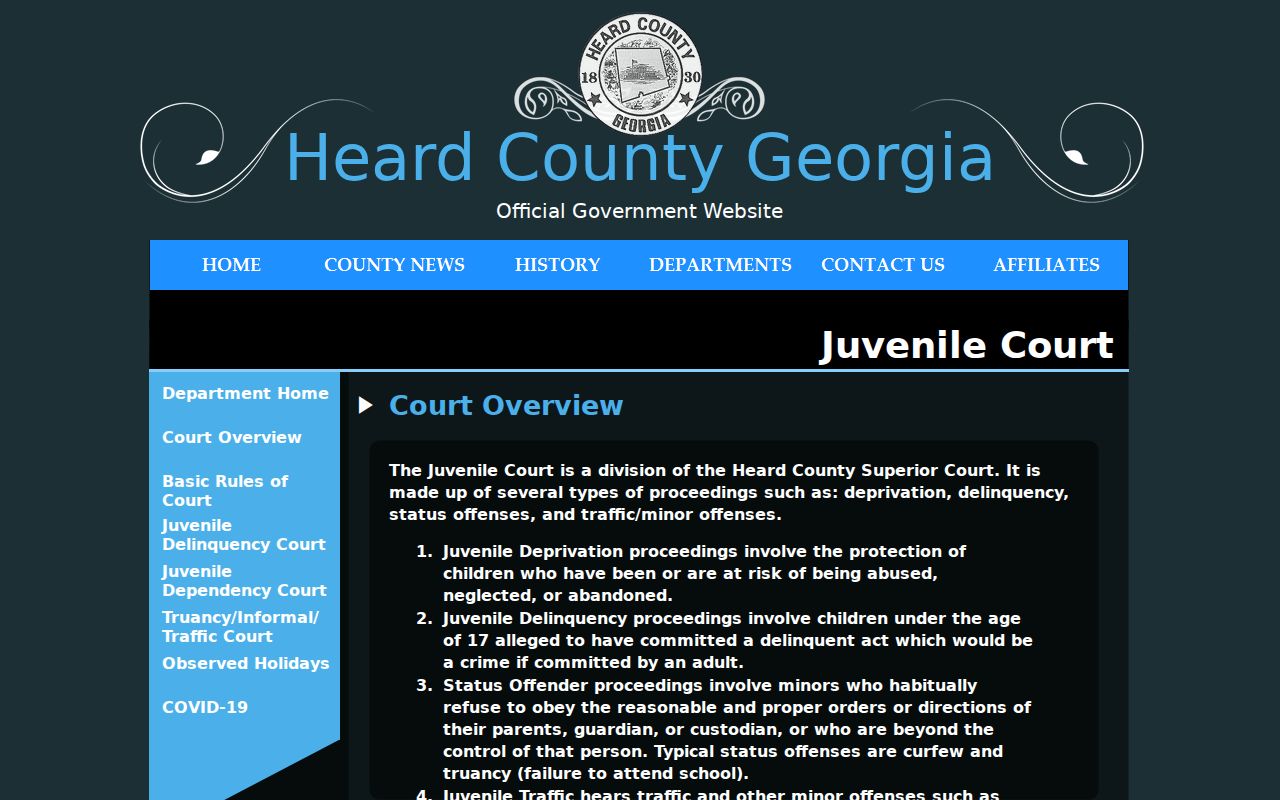
Eligibility and identification govern access to these records. The JDEX portal serves as an authorized data exchange, not a public workaround.
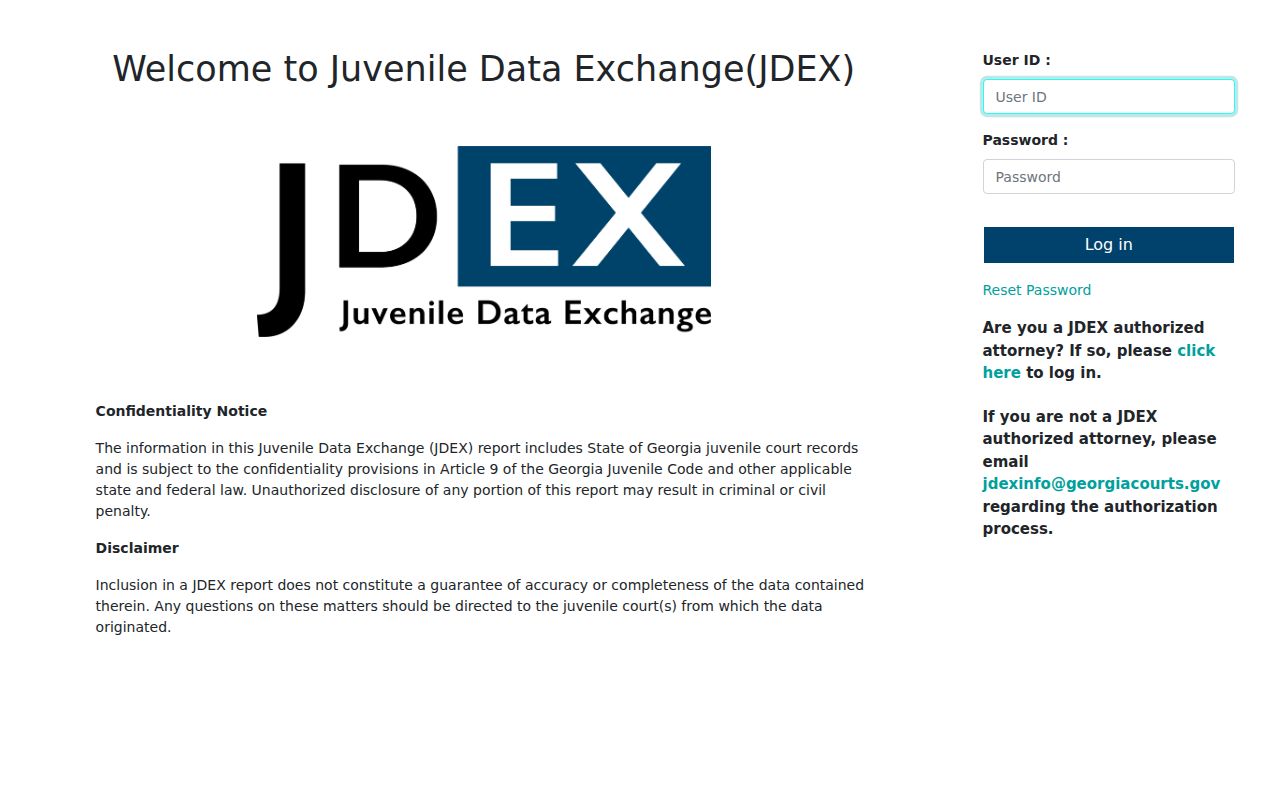
Its controlled login reinforces the public-access boundary.
Heard Juvenile Criminal Docket Dates
The county juvenile rules tell participants to call ahead and confirm each date, and they set strict security terms.
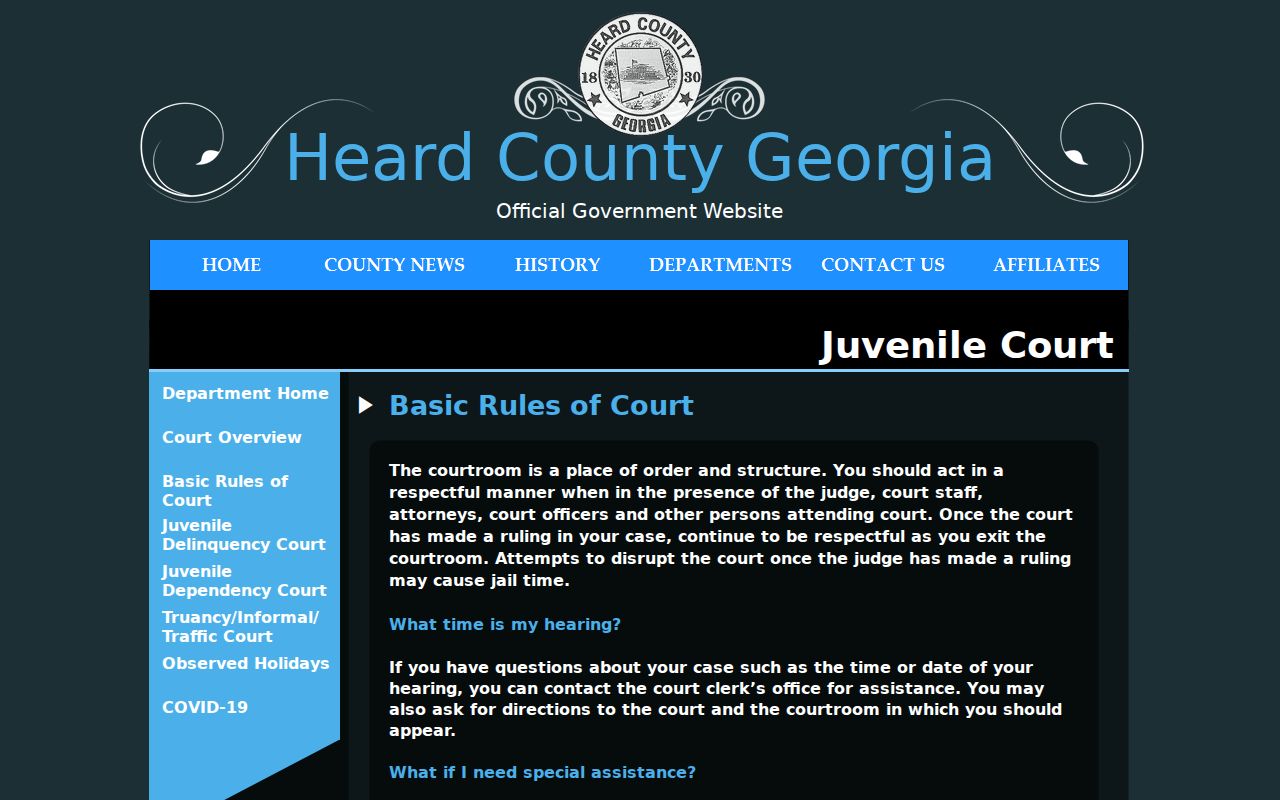
Those rules tie date checks to the court itself. They also bar recording, so a public calendar reveals nothing about private juvenile matters.
Access Rules for Criminal Dockets
Uniform Superior Court Rule 21 starts from public access. Law and court procedure can then impose limits. Any restriction order must state its scope, nature, duration, and reason, and privacy harm must clearly outweigh public interest. Protected identifiers may be masked.
Key rules:
Georgia Open Records Act guidance describes targeted requests and a general three-business-day response framework when records are available.
O.C.G.A. §35-3-37 guidance explains criminal-history restriction. Restriction does not erase every court docket.
Juvenile confidentiality and a sealing order cannot be bypassed by an open-records request.
For non-exempt material, name the court, the case or date range, and the record type. Federal records run through the Newnan Division or PACER, apart from state systems.
Heard Criminal Docket Program Context
Want to know which accountability courts touch Heard cases? The Georgia accountability-court directory names Carroll County Drug Court and Carroll County Juvenile Mental Health Court, both serving Carroll and Heard. It is a program list, though. A public Heard County criminal docket search is not what this directory provides.
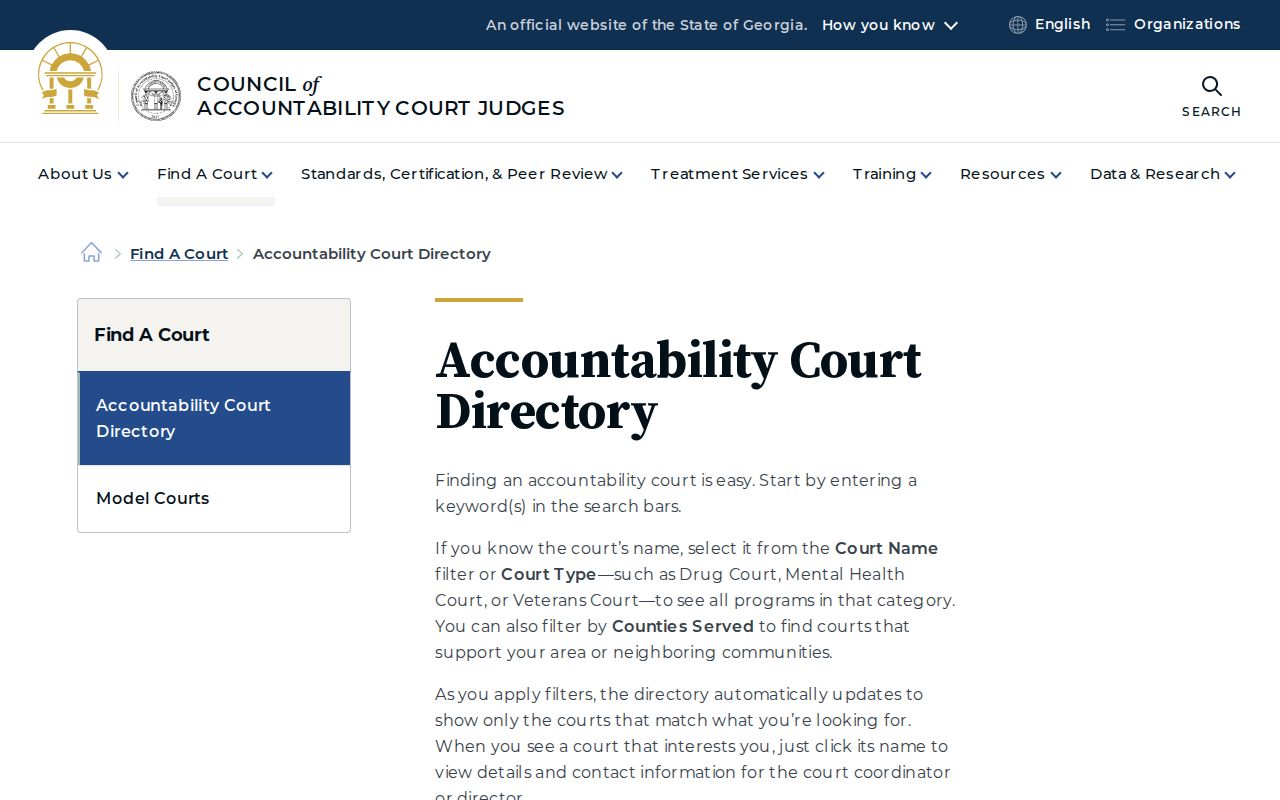
That official page explains something useful. A Heard case may show a program or circuit tag that reaches past the county name. Ask the clerk to confirm the setting and the court record. And read entries with care. A program listing, a missing result, a citation number, or a short status line is never proof of a conviction.