
Heard County Court Docket Searches
Start with the right court, not just a name. In Heard County, felonies and larger civil matters sit in Superior Court. Magistrate Court keeps its own civil files, plus warrants, dispossessories, and garnishments. Probate Court holds county traffic cases alongside its probate work. City matters stay with the municipal courts. Federal cases live in a separate federal system entirely. Pick the wrong court and the docket search may return nothing. Even so, the case file is real.
- Identify the case type, issuing agency, and likely court.
- For a Heard Superior docket, follow Georgia Courts E-Access to PeachCourt and sign in or register.
- For Magistrate, Probate, Juvenile, or city matters, contact that court's own clerk or use its official linked service.
- Confirm a hearing date or missing entry with the record custodian before acting on it.
- Request the filed document or a certified copy when the docket line is not enough.
The official Heard County home page routes visitors to county offices and traffic payment. Its court services panel appears just below.

That official page is a directory, not a countywide docket database. It separates a genuine office route from a broad third-party name search.
Heard Superior PeachCourt Access
Heard Superior appears in the official state e-access directory, which points public users to PeachCourt. An account is required. Registration allows non-attorneys to create one for free. That makes PeachCourt the main online starting point for a Superior Court docket. It is not a universal Heard County search tool. Document access varies by court and by document. A portal entry does not promise that every image is available.
The Georgia court navigation resource lays out the state's trial-court structure. Sorting out court class first, as that page shows, prevents wasted record searches.
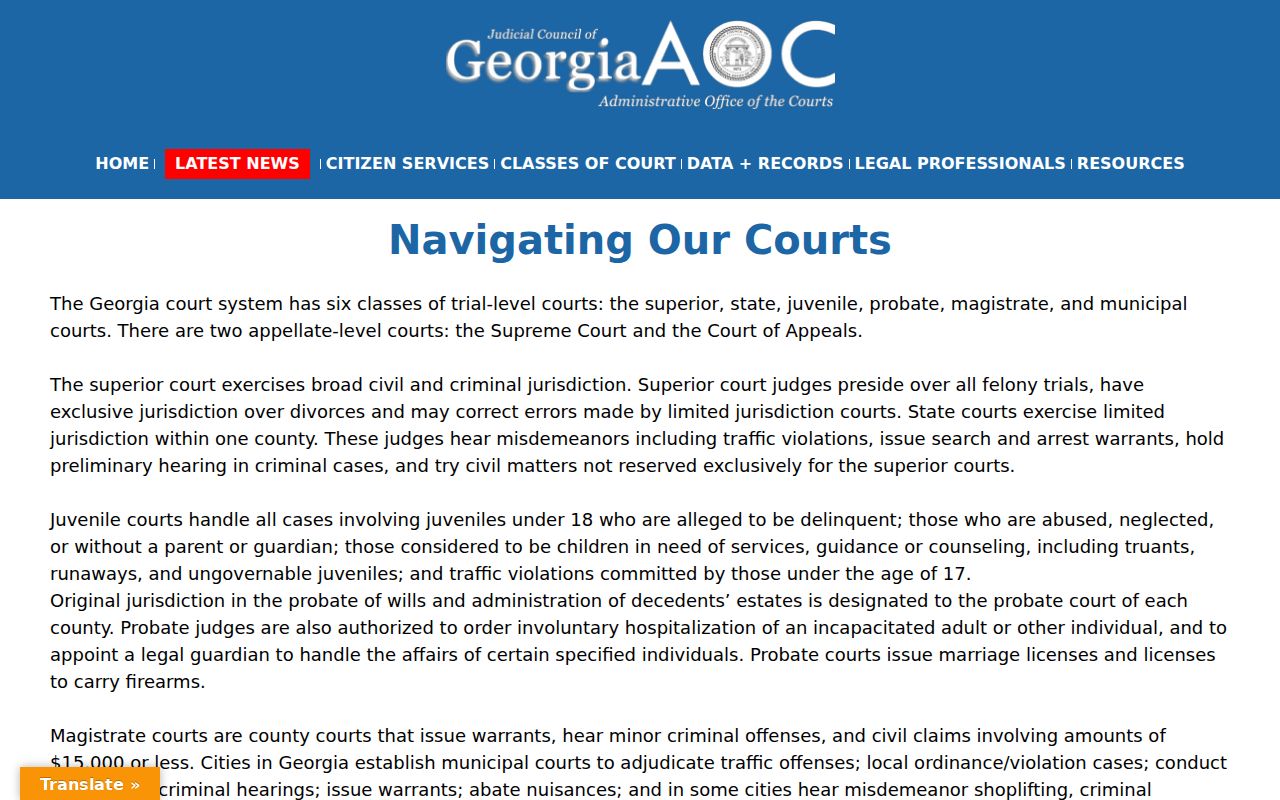
PeachCourt is not the Probate traffic tool, the Magistrate payment login, a municipal calendar, or the counter for confidential Juvenile records. Knowing those distinctions saves you from false dead ends.
| Channel | Use | Limit |
|---|---|---|
| PeachCourt | Heard Superior docket access | Account required; coverage varies |
| eFileGeorgia | County-linked Magistrate payments | Not the Superior search provider |
| EZ Court Pay | County traffic lookup and payment | Issuing court and posting time matter |
Court Dockets: What They Show
A Heard County court docket works as an index rather than a full case file. Expect to find the case number, the court, the filing date, parties and their roles, event types, hearing settings, and references to filed documents. Exact fields differ by court and system. A calendar row might list only a date, time, courtroom, proceeding type, case number, and case style. An intake form can capture the opening category yet leave later orders unseen.
| Case number | The court's unique file reference and best clerk lookup key |
|---|---|
| Entry date | When a filing or court action reached the history |
| Setting | A planned event, not proof that it occurred |
| Disposition | The recorded outcome of a claim, charge, or stage |
| Document link | Possible image access, subject to court rules |
Records come in three levels. A docket line identifies activity; a filed image supplies the text when available; a certified copy adds the clerk's formal attestation. Ask for the level that fits your need.
Four Heard County Docket Counters
Superior, Magistrate, Probate, and Juvenile operations all list 215 East Court Square in Franklin as their location. They still answer to no single custodian or access policy. Tammy Teal, Clerk of Superior Court, publishes her own physical and mailing address, phone, fax, email, and weekday schedule. Magistrate and Probate each publish separate numbers and post-office boxes. Juvenile access is restricted and follows its own counter rules.
Superior Clerk
215 East Court Square
P.O. Box 249
Franklin, GA 30217
(706) 675-3301
Monday through Friday, 8:30 a.m. to 5 p.m.
Fax: (706) 675-6138
Email: tteal@heardcountyga.com
By mail, send the case number if you have it. Add party names and roles, a date range, the exact document, and return details. Call before sending any payment. The county publishes no countywide copy form or price schedule. Fax and email reach the offices, but neither promises certified records can be ordered that way. Ask each clerk about a public terminal, since Heard County posts no terminal policy.
Heard County Courts and Dockets
Jurisdiction decides where a Heard County court record lives. Superior Court serves as the general-jurisdiction trial court. Magistrate handles specified civil work, warrants, and limited matters. Probate is the county traffic route and also maintains probate functions. Juvenile is a Superior division with confidential records. Three incorporated municipalities have their own city routes. Federal cases belong to the Northern District of Georgia's Newnan Division or federal bankruptcy court, not to Georgia's state portals.
| Court | Docket covers | Start |
|---|---|---|
| Heard Superior | Felonies and broad civil work | PeachCourt or Superior Clerk |
| Magistrate | Limited civil cases and warrants | Magistrate Clerk |
| Probate | County traffic and probate matters | Probate or EZ Court Pay |
| Juvenile | Juvenile files | Eligible requester at counter |
| Municipal | City ordinance and traffic matters | Issuing city |
| Federal | Federal district and bankruptcy | PACER or Newnan clerk |
West Georgia circuit court information gives context for the Superior tier.
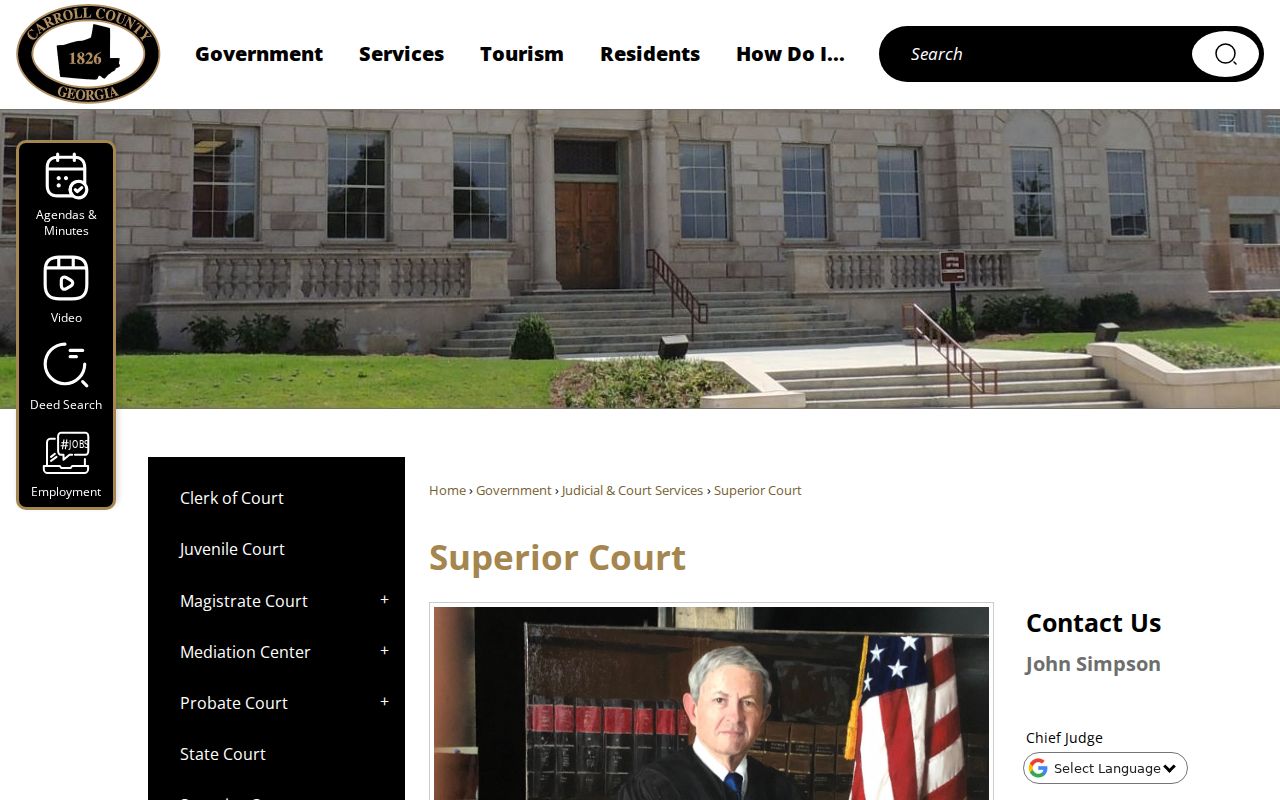
This circuit map joins Carroll and Heard, but it does not move the Heard clerk's local files.
Heard County Docket Search Gaps
An empty online result is not a case outcome. The wrong court may have been searched, an account may be needed, the entry may not have posted, or the record may be restricted. Some cases exist only through a clerk channel. So check spelling and the case number. Confirm the court class and county. For a traffic ticket, identify the issuing court. For juvenile matters, expect no public online record.
When a Superior search fails, contact the Superior Clerk with a narrow request. Magistrate or Probate questions go to those offices by phone. Municipal matters belong to the city, and federal searches run through PACER. Working that chain beats treating one vendor's screen as proof that no Heard County court docket exists.
Key point: “No result” describes one search attempt. It does not mean dismissed, sealed, cleared, or never filed.
Court Dates in Heard County
A case lookup and a hearing calendar answer different questions. The docket history shows filings and events. A setting tells when and where an event is planned. Heard County publishes a calendar PDF, but no unified searchable county calendar exists. Court pages point users to the specific clerk. Franklin separately posts a city calendar with a Municipal Court filter. Its document library also holds court-date material.
Read each setting for the date, time, and location. Note the judge or division when shown, plus the proceeding type. A reset or continuance moves a setting; it does not dismiss the case. Confirm changes with the clerk, especially when an older PDF or payment result conflicts with a court notice. The Heard County court schedule explains the separate calendar routes.
- Setting
- A scheduled court event.
- Continuance
- A court-approved move to a later date.
- Disposition
- A recorded result, not a future hearing.
Heard County Traffic Docket Split
A Heard County traffic ticket will not land in PeachCourt by default. County and Probate Court link to EZ Court Pay. That lookup wants a date of birth plus a citation number or a last name. Georgia Courts warns of no centralized citation database. Online availability may take seven to twenty-one business days. Municipal citations can fall to the city court instead. Meanwhile, the court file and the Department of Driver Services record are two different things. The docket shows the citation case, the setting, the plea, the ruling, and the disposition the court recorded. DDS maintains the driving record and takes court-reported convictions. A payment screen is not a full docket or a calendar notice, so identify the issuing authority, allow for posting, and call the court if the citation stays missing.
Docket Access Under Georgia Law
Georgia law leans toward open court records. Still, court rules, sealing orders, and confidentiality laws apply on top of that openness. The Georgia Open Records Act supports focused requests. It covers non-exempt administrative or public material, never a sealed or confidential juvenile file. Aim the request at the office most likely to hold the record. Give a clear description and a useful range.
Georgia access framework: Georgia Open Records guidance summarizes O.C.G.A. §§ 50-18-70 and 50-18-71. Uniform Superior Court Rule 21 addresses court access, sealing, hearings, and protected identifiers. Record-restriction guidance explains that restriction does not always seal a full court docket.
Juvenile Court carries the clearest Heard-specific limit. Eligible requesters must appear at the counter with photo ID, records will not be mailed, and JDEX serves authorized users rather than the public.
Heard County Docket Data Limits
Georgia's court dashboards count work in the aggregate. Names, case numbers, filings, and documents stay out. The 2025 workload assessment reports at the West Georgia Judicial Circuit level, which combines Carroll and Heard. So those figures cannot be called Heard-only filings. They explain a shared circuit, but they cannot locate one court record. The Georgia Courts data page shows the reporting context.
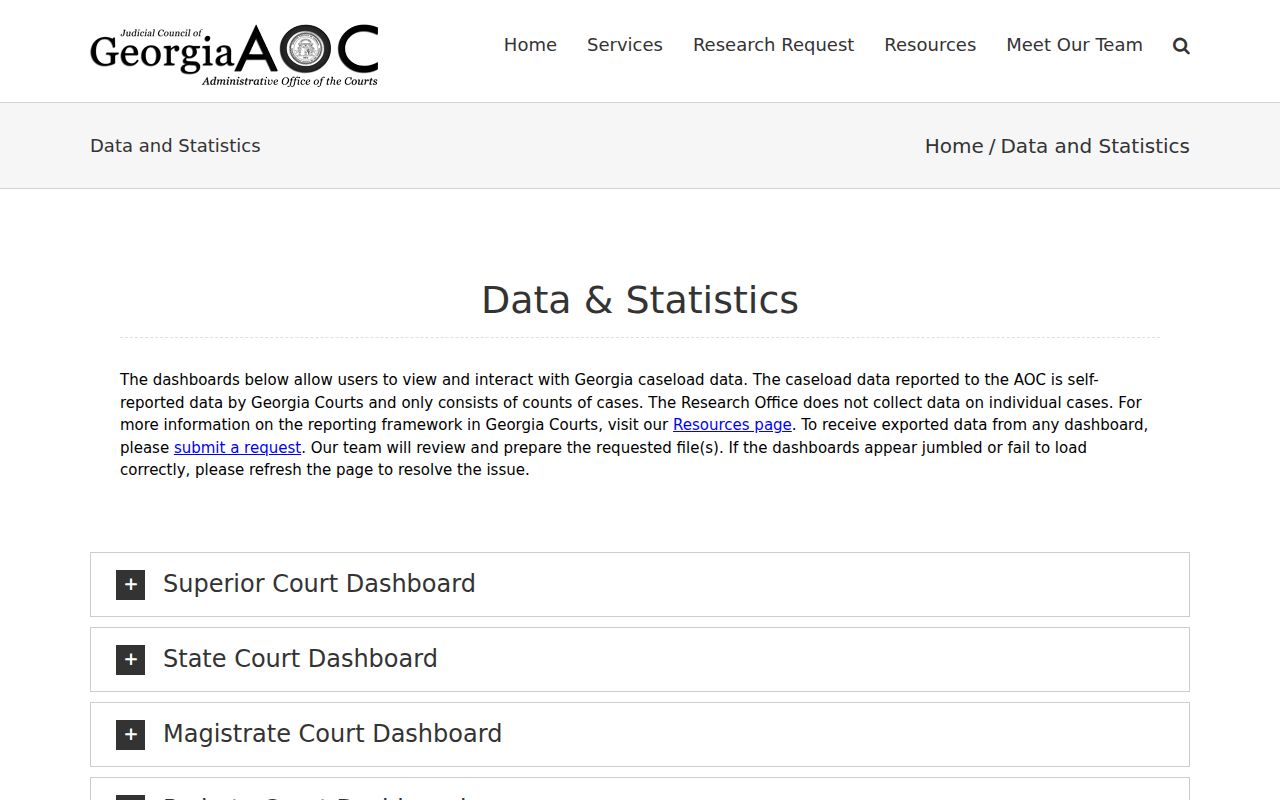
Aggregate data describes operations, not cases: the clerk and the docket platform locate them.
How the Clerk Keeps Dockets
Tammy Teal's Superior Clerk office is the main custodian. It covers Superior Court and its Juvenile division. Heard County runs a split-clerk model, though. Magistrate and Probate each operate separate counters for their records, and city calendars, ordinances, and requests go to municipal clerks or city offices. A clerk can certify only what that office holds.
A good request names the case number, the party roles, the date range, the exact document, the copy type, and a return contact. Ask about search, copy, certification, postage, and payment rules before you mail funds. Heard Magistrate publishes a fee sheet. Superior posts no countywide price list, and Magistrate's check-or-money-order instruction does not bind every court. A certified order must come from the custodian of that file, not from another office sharing Court Square.
Heard County Courthouse Record Trail
Heard County records a courthouse fire in 1893. A replacement followed in 1894, and the courthouse changed again in 1964. Those dates frame a long local record system. They do not prove all earlier court records burned. Start historical research with the current clerk for that court class and follow any archive referral. The official county history supplies that timeline.

Franklin's courthouse history ties to the modern record cluster. But an old jail or museum is not the current docket custodian.
Federal Heard County Dockets
Federal cases involving Heard County appear nowhere in PeachCourt. They also skip the county traffic tool and any city calendar. Heard sits in the Newnan Division of the Northern District of Georgia. Its district and bankruptcy dockets run on PACER and CM/ECF. Newnan clerk offices help directly. The PACER Case Locator searches participating federal courts. Sealed material stays off limits either way. Confirm the court, division, case number, and the entries you need before paying for documents. A federal calendar may show a date, time, courtroom, proceeding type, case number, and style. Still, that row is not a complete court record.
Heard County City Court Records
Heard County has exactly three incorporated places in the official 2020 Census place table. They are Franklin, Ephesus, and Centralhatchee. Padding the list with unincorporated communities would be wrong. Each city takes a different route. Franklin keeps a municipal calendar and document path, while Centralhatchee publishes ordinance and charter material. Ephesus City Hall is the practical contact, since the city posts no current public docket portal. The Census place table supports the three-city list.
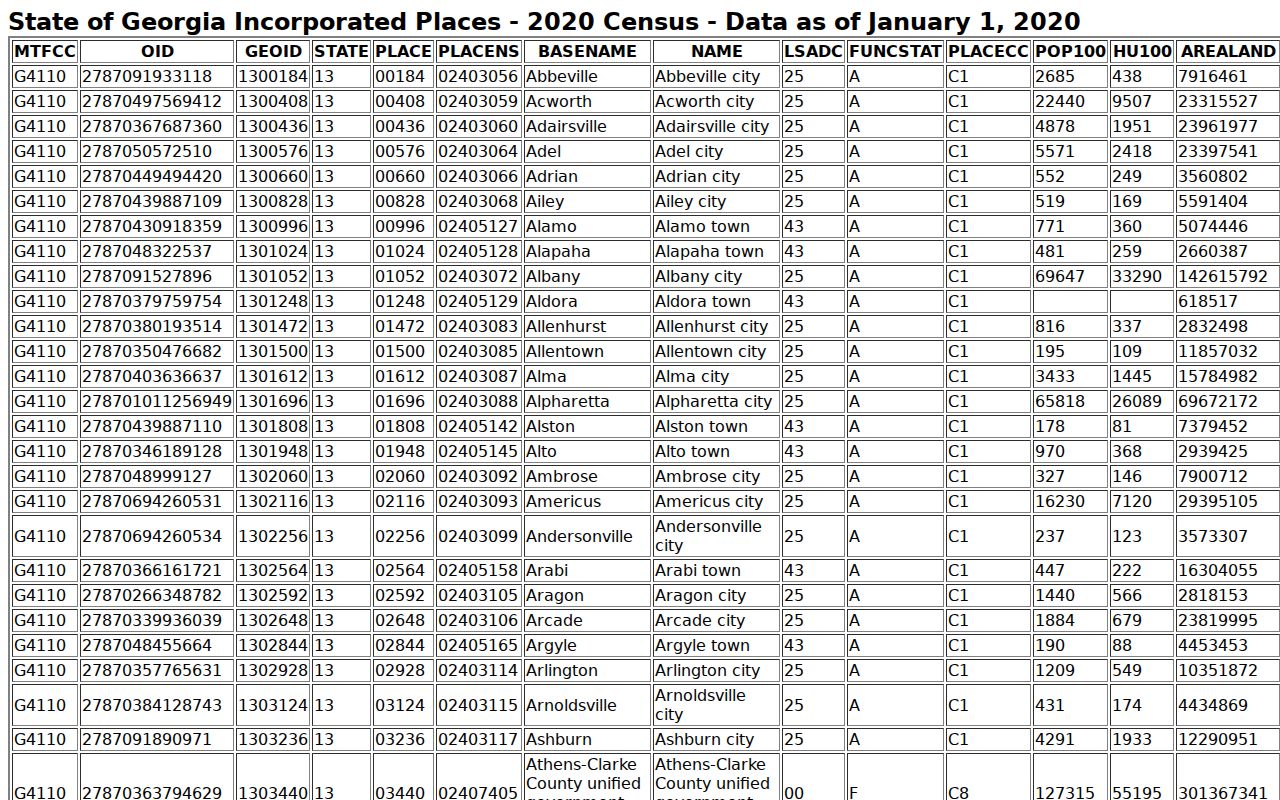
The official table determines the city set without turning population data into case data.
Franklin Court Records
Use the Municipal Court calendar, library, and clerk contact.
Centralhatchee Court Records
Use City Hall, ordinances, and town-clerk materials.
Map and Directions to the Heard County Courthouse
Superior Court's felony and broad civil docket is kept at 215 East Court Square in Franklin, the same courthouse cluster that houses Magistrate, Probate, and Juvenile Court operations, though each keeps a separate custodian, phone line, and P.O. box. Clerk of Superior Court Tammy Teal's office handles the Superior civil and criminal filings from this address.
Heard County Courthouse
215 East Court Square
P.O. Box 249
Franklin, GA 30217
(706) 675-3301
Monday through Friday, 8:30 a.m. to 5 p.m.
No official page states whether a public access terminal exists at the Court Square counters, so ask the specific clerk before a trip. The Juvenile Court operates as a full security facility where weapons, bags, and similar objects may be screened, including knives, scissors, corkscrews, mace or pepper spray, and knitting needles.